


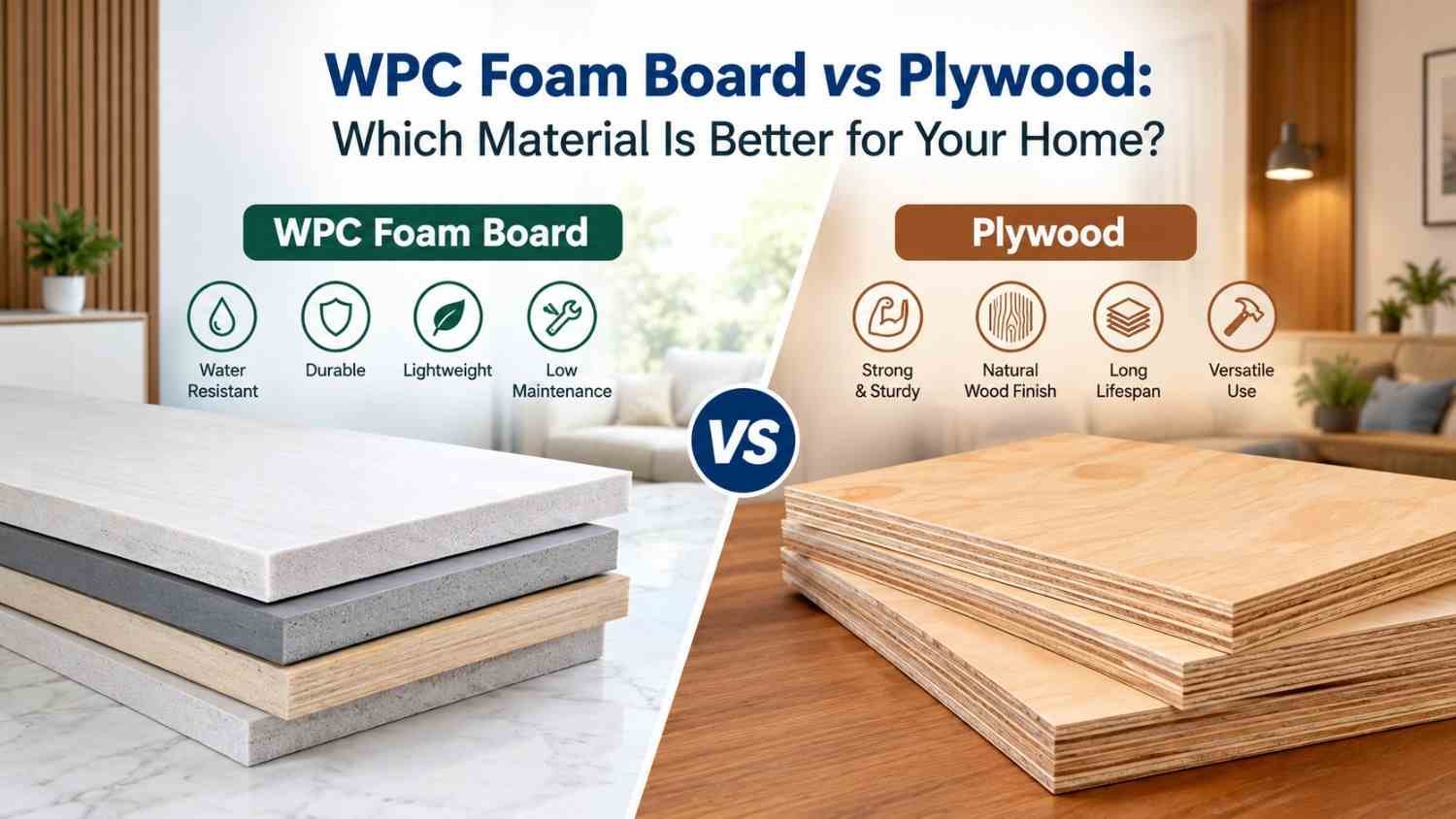
Choosing the right material for home interiors can affect furniture strength, maintenance, appearance, and long-term value. Whether you are planning a modular kitchen, a new wardrobe, or custom storage units, understanding the difference between available board materials helps you make a practical decision. The comparison of WPC Foam Board vs Plywood is especially important because both materials offer different benefits depending on where and how they are used.
WPC foam board is a composite material valued for its moisture resistance, while plywood is known for its strength and versatility in furniture making. However, neither material is ideal for every application. Before selecting one for your home, consider the expected load, exposure to moisture, finishing requirements, and overall project budget.
Understanding the Difference Between WPC Foam Board and Plywood
Typically, WPC foam board is produced with polymers, additives, and other formulation ingredients to provide a light yet robust panel. It is composed of materials that are suitable for applications that require moisture resistance and ease of maintenance.
Plywood, in contrast, is made from thin sheets of wood bonded together in layers. This made plywood a popular choice in cabinetry, wardrobes, shelves and other furniture designs. Its performance is dependent on the quality of wood, the type of adhesive, the wood grade and the manufacturing method.
By recognizing the difference, homeowners can select materials that best meet their interior needs based on their needs and not just on product claims.
WPC Foam Board vs Plywood: Key Differences
When comparing WPC Foam Board vs Plywood, evaluate the features that matter most for your project.
| Feature | WPC Foam Board | Plywood |
| Moisture resistance | Generally high | Depends on grade and sealing |
| Structural strength | Varies by density and formulation | Generally suitable for load-bearing furniture |
| Termite resistance | Generally resistant | Depends on treatment and product quality |
| Maintenance | Usually low | Requires suitable protection from moisture |
| Finishing options | Depends on surface and product | Supports laminates, veneers, and paint |
| Common applications | Panels, partitions, selected cabinets | Wardrobes, shelves, cabinets, and furniture |
These characteristics can vary between manufacturers, so check the specifications of the actual product before making a decision.
WPC Foam Board vs Plywood for Home Interiors
This will largely depend on the room and the average usage of the room. In water-prone environments, for bathroom applications and decorative panels, and in a few interior applications, WPC foam board can be useful.
Plywood is often preferred for beds, bookshelves, wardrobes, and furniture that must support regular loads. It also offers flexibility in design and finishing, making it suitable for different interior styles.
For homeowners comparing the advantages and disadvantages of WPC foam board, the important consideration is balancing moisture resistance with strength, fixing requirements, and the intended finish.
Water Resistance and Durability: Which Material Performs Better?
One of the primary reasons why people are considering WPC foam board is the fact that it is water resistant. Appropriate WPC foam panels are usually able to withstand moisture and swelling as compared to traditional wood-based panels. This can make them handy around wash areas and other wet spots.
The grade of plywood is important to its performance. For extended exposure to moisture, standard interior plywood might not meet the requirements, and if they do, it may not be the best choice, but appropriately rated BWR or BWP plywood may offer a better range of moisture resistance in very challenging settings. Other factors that impact upon its service life include edges, joints, installation, and surface protection.
If comparing WPC Foam Board vs Plywood durability, it depends on the environment. WPC foam board has the advantage in places that require moisture resistance, and in many furniture uses, the performance of structural use can be better than that of plywood.
WPC Foam Board vs Plywood for Kitchen Cabinets and Wardrobes
Spills in kitchen cabinets, steam from cooking, frequent opening, and weight of utensils. In certain areas, especially in the vicinity of sinks, WPC foam board can be used if it is designed for the purpose. But the strength of the cabinet and the fixing of hinges and shelf supports should also be taken into account.
Plywood is a common choice for kitchen carcasses and wardrobe structures because of its strength and screw-holding properties. For wardrobes, heavy shelves, and frequently used cabinet doors, these features can be particularly important.
The strength of WPC foam board is compared to plywood, so don’t just pick the material name for your choice. The thickness, density, span, hardware, and installation of the board all affect performance.
WPC Foam Board vs Plywood Cost Comparison
The initial price is only one part of the overall expense. Your budget should also account for cutting, installation, finishing, hardware, wastage, and future maintenance.
WPC foam board may cost more or less depending on its formulation, density, thickness, and brand. Plywood prices similarly vary by grade, veneer quality, and adhesive type. Request comparable specifications and quotations before deciding which material offers better value.
The best board material for home furniture is the one that meets your performance requirements without unnecessary expense.
How Manufacturing Quality Influences Board Performance
Consistent manufacturing helps produce boards with more predictable dimensions, density, and surface quality. This is where machinery selection and processing methods become relevant to manufacturers supplying the interior and furniture industries.
Stellar Machinery Pvt. Ltd. supports the manufacturing sector with machinery-related solutions, including the WPC foam board machine in Haryana and the WPC door frame machine in Haryana. Suitable equipment and process control can help manufacturers work towards consistent product quality, depending on machine configuration and operating conditions.
Final Verdict: Which Material Should You Choose?
The comparison of WPC Foam Board vs Plywood does not have one universal winner. WPC foam board is worth considering when moisture resistance and low maintenance are priorities. Plywood is often the practical choice for furniture that needs reliable strength, secure hardware fixing, and versatile finishing options.
Before purchasing, compare specifications, check the manufacturer’s recommendations, and match the board to the application. A carefully selected material can help your home interiors remain functional, attractive, and easier to maintain over time.