


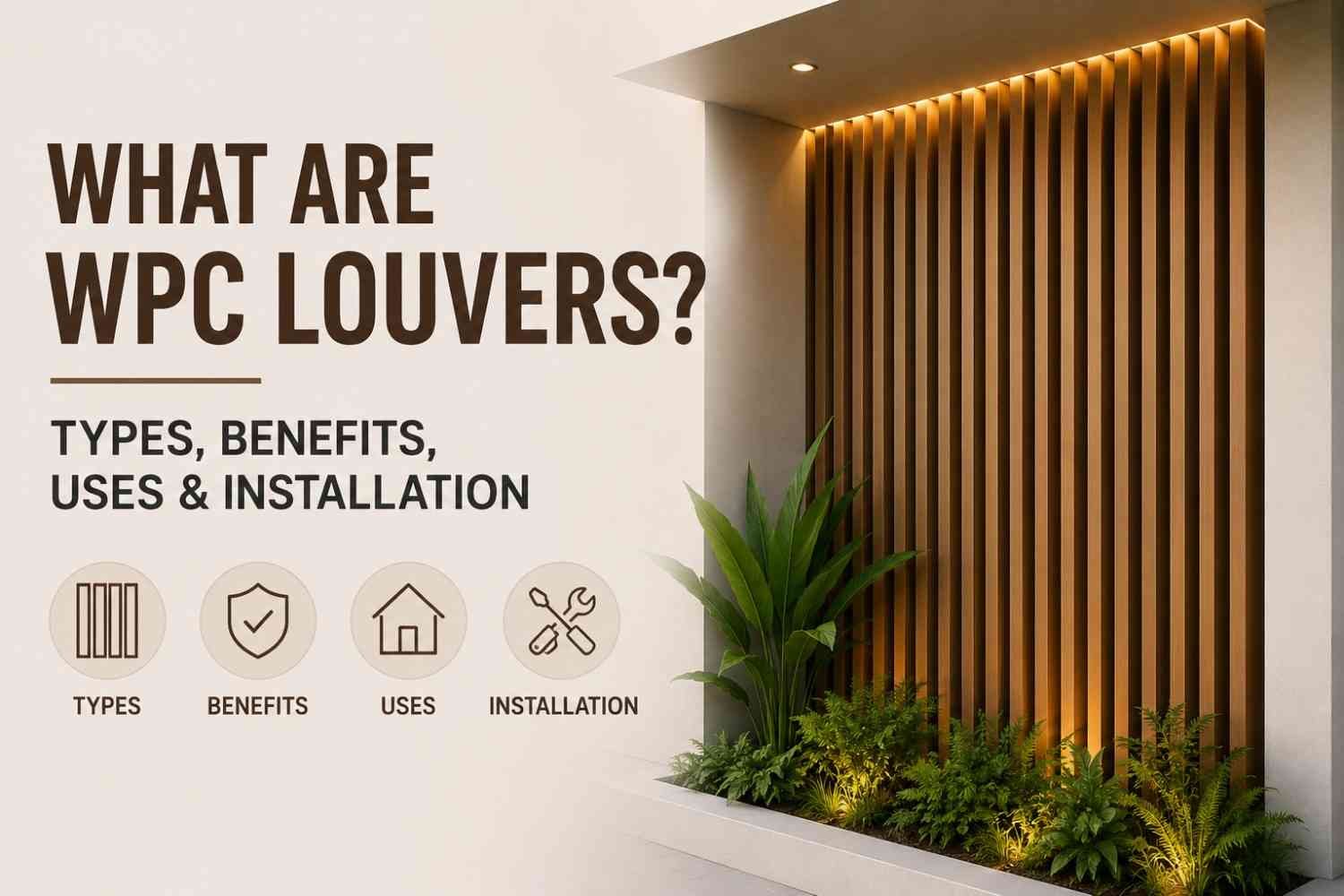
Modern interior and exterior design increasingly focuses on materials that combine aesthetics, durability, and easy maintenance. WPC Louvers have become a popular choice for residential, commercial, and hospitality spaces because they offer the visual appeal of wood while providing the practical advantages of wood-plastic composite materials.
From decorative walls and ceilings to partitions and façade applications, WPC Louvers can add texture and a contemporary architectural look to different spaces. But what exactly are they, what types are available, and where can they be used? Let’s explore everything you need to know.
What Are WPC Louvers?
WPC stands for Wood Plastic Composite, a material generally manufactured using a combination of wood-based fibers or powder and thermoplastic materials, along with suitable additives. WPC Louvers are specially designed profiles or slatted panels made from this composite material.
Their linear, structured appearance makes them suitable for creating decorative surfaces, partitions, ceilings, and feature walls. Unlike natural wood, WPC products are designed to offer better resistance to moisture and everyday environmental conditions, depending on their formulation and application.
Types of WPC Louvers
Different spaces require different designs and profiles. Some common types include:
1. Decorative WPC Louvers
These are primarily used to enhance the appearance of walls, ceilings, and other interior surfaces. They are available in different textures, finishes, and patterns to complement modern décor.
2. WPC Wall Louvers
WPC wall louvers are often put up as feature walls or decorative panels, kind of thing. You can place them behind televisions, reception desks, beds, or seating areas so they look like a real focal point, not just plain surfaces.
3. WPC Ceiling Louvers
WPC ceiling louvers can make plain ceilings look more arranged and a bit more sophisticated, in a way that just… fits. They’re especially good for offices, restaurants, showrooms, hotels, and also contemporary homes, where you want a tidy but expressive vibe without much fuss.
4. Exterior Louvers
Certain WPC profiles can also be used for selected exterior applications where the product specification is suitable. Proper material selection and installation are important when the louvers are exposed to changing weather conditions.
Benefits of WPC Louvers
The popularity of WPC Louvers comes from the combination of appearance and practical performance they offer.
Attractive Appearance
One of the biggest advantages is how they can create a sort of wood- like look. You get different surface textures and finishes, and somehow it helps designers reach warm, elegant, or more contemporary feelings, without fully depending on natural timber.
Moisture Resistance
Compared with conventional wood, suitable WPC products offer improved resistance to moisture. This makes them useful for many applications where traditional wood may require additional protection.
Low Maintenance
WPC Louvers generally require less routine maintenance than natural wood. Regular dusting and cleaning with appropriate methods can help keep their surface looking presentable for longer.
Design Flexibility
WPC profiles can be produced in different dimensions, patterns, colors, and surface finishes. This flexibility allows architects, interior designers, and homeowners to create customized visual effects.
Durable Construction
Quality WPC products are meant to give dependable performance if the conditions are right. Their durability, on the other hand, kinda hinges on the material makeup, the actual manufacturing quality, how they are installed, and the surrounding environment where they are placed.
Where Are WPC Louvers Used?
The versatility of WPC Louvers makes them suitable for a wide range of applications. In homes, they can be used for living-room feature walls, bedroom backgrounds, partitions, ceilings, and decorative corners.
In commercial spaces, they’re often thought about for reception zones, office rooms, restaurants, retail shops, hotels, and showrooms; it’s kind of common. Also, they can be folded into a few façade and outside design projects when the product is really meant for outdoor usage only.
Because they create depth and visual rhythm, WPC Louvers can make otherwise plain surfaces more visually interesting.
How Are WPC Louvers Installed?
The WPC louvers installation process depends on the profile, surface, design, and application. Before installation, the base surface should be clean, stable, and properly prepared.
Typically, the required measurements are taken first, followed by cutting the profiles according to the planned layout. A suitable supporting structure, adhesive, fasteners, or a combination of installation methods may then be used depending on the product and project requirements.
Proper spacing and alignment are particularly important because even small installation errors can affect the overall appearance. For larger projects, professional installation is recommended to achieve consistent finishing.
Choosing the Right WPC Louvers
Before purchasing, consider the intended application, dimensions, surface finish, color, environmental conditions, and installation requirements. For commercial or manufacturing requirements, production consistency and profile accuracy are equally important.
Businesses looking to manufacture these profiles can explore suitable WPC louvers machine in Haryana options based on their required production capacity, profile specifications, and level of automation. Similarly, manufacturers producing multiple WPC products may also evaluate a WPC foam board machine in Haryana for expanding their product range.
Final Thoughts
WPC Louvers give you a pretty effective way to mix that decorative look with something practical too; it works in a real way. They come with a wide set of designs and use cases, plus lots of finishes and installation choices, so you can match what you need. Because of that, they fit both homes and commercial projects too, even when the space is a bit different.
If you are putting together a feature wall, a decorative ceiling, a partition, or some other architectural application, it really helps to understand the material, the profile, how it’s installed, and where it will be used, so you can pick the right product. Once you choose properly and install it correctly, WPC Louvers can give you that modern, good-looking result, while the upkeep needs stay pretty easy, simple even, compared to a lot of other options.