


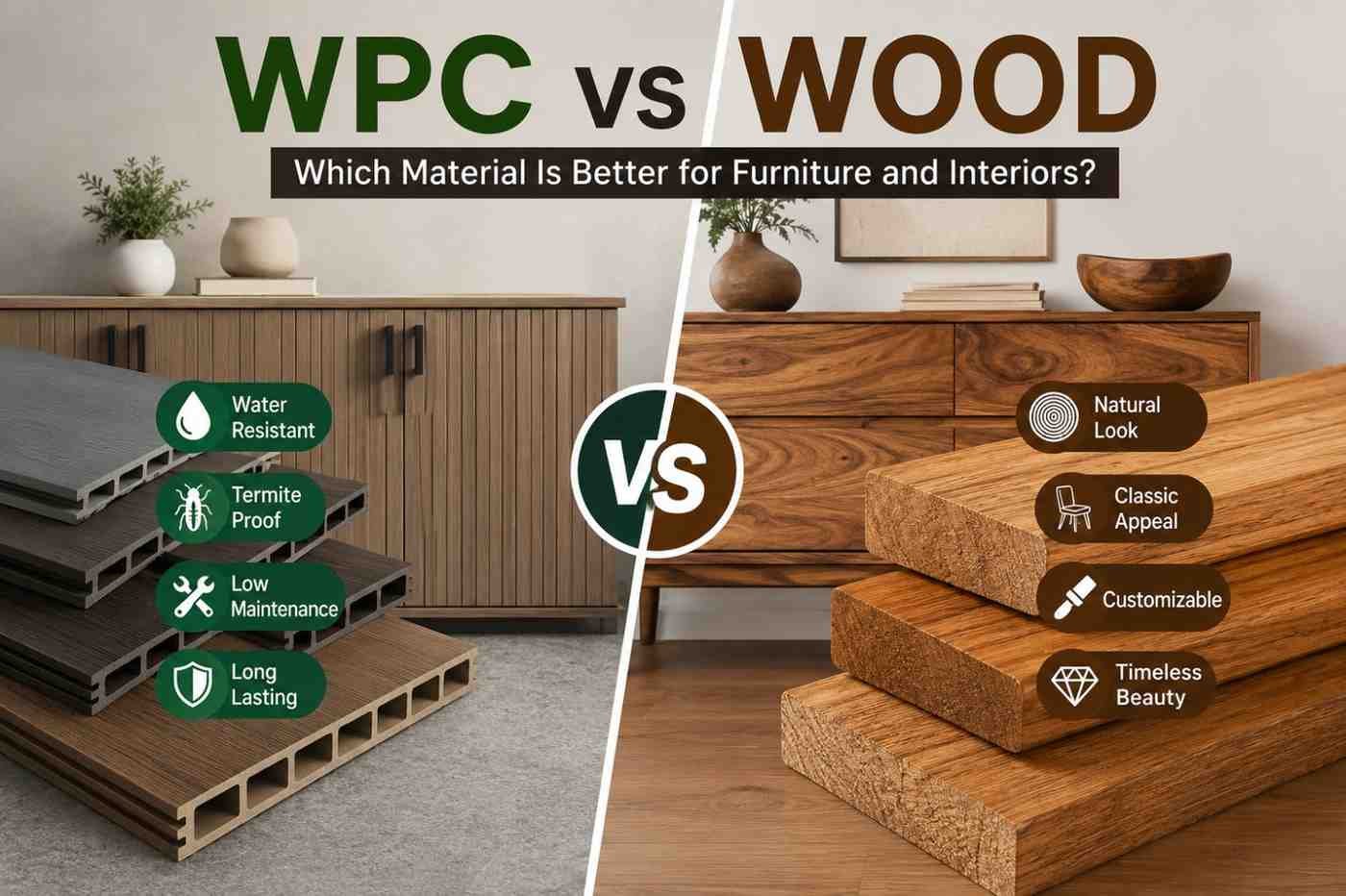
Choosing the right material is one of the most important decisions when designing furniture or planning interior spaces. Today, the comparison of WPC vs Wood has become increasingly popular as homeowners, architects, and furniture manufacturers look for materials that offer durability, aesthetics, and long-term value. While natural wood has been a trusted choice for generations, modern wood-plastic composite material has emerged as a reliable alternative with several practical advantages.
At Stellar Machinery Pvt. Ltd., we understand the growing demand for advanced WPC manufacturing solutions and high-quality interior materials. In this blog, we’ll compare WPC vs wood based on durability, maintenance, cost, applications, and overall performance to help you make an informed decision for your next furniture or interior project.
What Is WPC?
WPC (Wood Plastic Composite) is one of those engineered materials, made by mixing wood fibres, thermoplastics, and some performance-boosting additives. The way it is put together gives you boards that are really durable and pretty resistant to moisture. They also tend to be termite-proof and overall a bit more stable than simpler options.
Today, WPC is widely used for modular kitchens, wardrobes, bathroom cabinets, wall panels, office furniture, partitions, and decorative interiors because it offers excellent strength with minimal maintenance.
What Is Natural Wood?
Natural wood is obtained straight from trees and has been used in furniture making and building work for centuries. People like it because of the natural grain designs, that kind of timeless appeal, and that premium look. It’s kind of a classic choice really.
However, wood requires proper care to maintain its quality, as it can be affected by moisture, termites, fungal growth, and changing weather conditions.
WPC vs Wood: Key Differences
When comparing WPC vs Wood, understanding their core differences helps you choose the right material for your needs.
1. Durability
Durability is one of the biggest deciding factors in WPC vs Wood.
WPC boards are engineered so they can take heavy usage without cracking, warping, or shrinking, and honestly, they hold up really well. They also work exceptionally well even in humid environments, which is kind of a nice plus.
Natural wood is undoubtedly strong, but prolonged exposure to moisture and temperature changes can cause swelling, cracking, or bending over time.
If long-lasting performance is your priority, WPC has a clear advantage.
2. Water Resistance
Water exposure significantly affects the lifespan of furniture.
One of the biggest benefits of WPC board is its excellent water resistance; I mean it really holds up well. WPC boards do not soak up moisture, so they stay fit for kitchens, bathrooms, balconies, and also utility spaces.
Wood naturally absorbs water and generally requires sealing or polishing to reduce moisture damage.
3. Termite Resistance
Termites are one of the biggest threats to wooden furniture.
Since WPC is manufactured using wood-plastic composite material, it offers excellent resistance against termites, fungi, and insects.
Wood generally requires periodic anti-termite treatment to maintain its durability, adding to long-term maintenance costs.
4. Maintenance
Maintenance is another important consideration in WPC vs Wood.
Wooden furniture often requires polishing, painting, sealing, and regular maintenance to preserve its appearance.
WPC boards require minimal maintenance. Regular cleaning with a damp cloth is usually sufficient to keep them looking clean and attractive.
This makes WPC an ideal choice for busy homes, offices, hotels, and commercial spaces.
5. Appearance
Natural wood is known for its elegant grain and luxurious finish, making it a preferred choice for premium furniture.
WPC boards, however, are available in various finishes, textures, and laminate options that complement modern interior designs.
Whether you prefer a traditional or contemporary style, both materials offer attractive design possibilities.
6. Sustainability
Environmental responsibility has become increasingly important in modern construction.
The production of a wood-plastic composite material uses recycled plastic together with wood fibers, so it reduces dependence on natural timber and supports sustainable manufacturing practices as well.
Choosing WPC helps minimize deforestation while promoting environmentally friendly building solutions.
WPC Board vs Wood: Which Is Better for Furniture?
The comparison of WPC board vs wood depends on the intended application.
WPC is ideal for:
- Modular kitchens
- Wardrobes
- Bathroom cabinets
- TV units
- Office furniture
- Wall panels
- Decorative partitions
- Commercial interiors
Wood is suitable for:
- Luxury handcrafted furniture
- Traditional wooden décor
- Antique furniture
- Decorative wooden structures
For everyday furniture exposed to moisture and frequent use, WPC board vs wood comparisons generally favor WPC because of its durability and lower maintenance requirements.
WPC vs Plywood: Which Material Performs Better?
Many homeowners also compare WPC vs plywood before selecting a material.
WPC Boards
- Waterproof
- Termite resistant
- Long-lasting
- Low maintenance
- Suitable for wet areas
Plywood
- Strong structural strength
- Requires laminates or polishing
- Can absorb moisture
- Vulnerable to termites
- Needs regular maintenance
For kitchens, bathrooms, and humid climates, WPC is often the more practical choice.
Benefits of WPC Board
The growing popularity of WPC is driven by its excellent performance and versatility.
Some major benefits of WPC board include:
- Waterproof construction
- Excellent durability
- Moisture resistance
- Termite-proof properties
- Fire-retardant options
- Eco-friendly composition
- Smooth surface finish
- Easy installation
- Low maintenance
- Long service life
These qualities make WPC suitable for both residential and commercial furniture applications.
WPC Board for Furniture: Popular Applications
Today, WPC board for furniture is widely used in various industries because of its strength and versatility.
Some common applications include:
- Kitchen cabinets
- Wardrobes
- Bathroom vanities
- Modular furniture
- Office workstations
- Retail display units
- Hotel interiors
- Hospital furniture
- Wall cladding
- Ceiling panels
- Decorative partitions
- Educational furniture
Its moisture-resistant and termite-proof properties make it an excellent long-term investment.
WPC Board Price: Is It Worth the Investment?
When comparing materials, many buyers consider WPC board price before making a decision.
Although the initial cost of WPC may be slightly higher than some conventional materials, it offers greater long-term value because of:
- Lower maintenance costs
- No termite treatment expenses
- Longer lifespan
- Reduced repair costs
- Better resistance to moisture
- Lower replacement frequency
Considering the overall lifecycle cost, WPC often proves to be a more economical investment.
WPC vs Wood: Which One Should You Choose?
The answer to WPC vs Wood depends on your project requirements.
Choose WPC if you need:
- Waterproof furniture
- Low-maintenance material
- Termite resistance
- Long-lasting durability
- Modern modular furniture
- Sustainable building material
Choose natural wood if you prefer:
- Traditional appearance
- Natural grain texture
- Luxury handcrafted furniture
- Classic interior designs
For most residential and commercial projects, WPC offers a better balance of durability, functionality, and long-term value.
Conclusion
When you look at WPC vs wood, it really boils down to how it performs, how hard it is to keep up with later, and where you plan to use it. Natural wood is still kind of adored for its timeless charm and that premium look people want. But WPC is more often the go-to for current furniture and interior projects, mainly because it’s tougher in daily life, handles moisture better, has termite-resistant qualities, and needs far less upkeep overall.
Whether you are planning a modular kitchen, setting up an office, or just renovating your place, it really helps to get a clear feel for WPC vs wood so you can pick the right material with confidence. Before you lock in a final choice, it’s also wise to do that comparison: WPC board vs wood part, then look into WPC vs plywood too. After that, it matters to understand the advantages of WPC board, plus figure out which WPC board is most suitable for furniture applications. And don’t forget to estimate the overall WPC board price according to your project needs, because costs can shift depending on the use case.
If you’re looking to manufacture high-quality WPC products, explore advanced solutions like a WPC door frame machine in Punjab and a PVC wall panel machine in Punjab to support efficient and reliable production.